008617513275220

Automobile brake pads, also known as brake linings, play a crucial role in the safe operation of vehicles. Brake pads are composite components composed of several key constituent elements. First is the friction material layer, which is the core of the brake pad. Its function is to reduce the vehicle speed by generating friction. This friction material is a mixture of various components such as semi-metals, ceramics, and carbon fibers, each of which plays a unique role in the final performance of the brake pads.
The core task of the brake pad material mixing equipment is to thoroughly and evenly mix these raw materials with different properties and strict proportions. Only by achieving uniform mixing can the performance of each brake pad be guaranteed to be consistent, and the braking effect differences caused by uneven material distribution be avoided. Otherwise, problems such as local friction overheating, uneven wear, and even serious braking failure may occur.
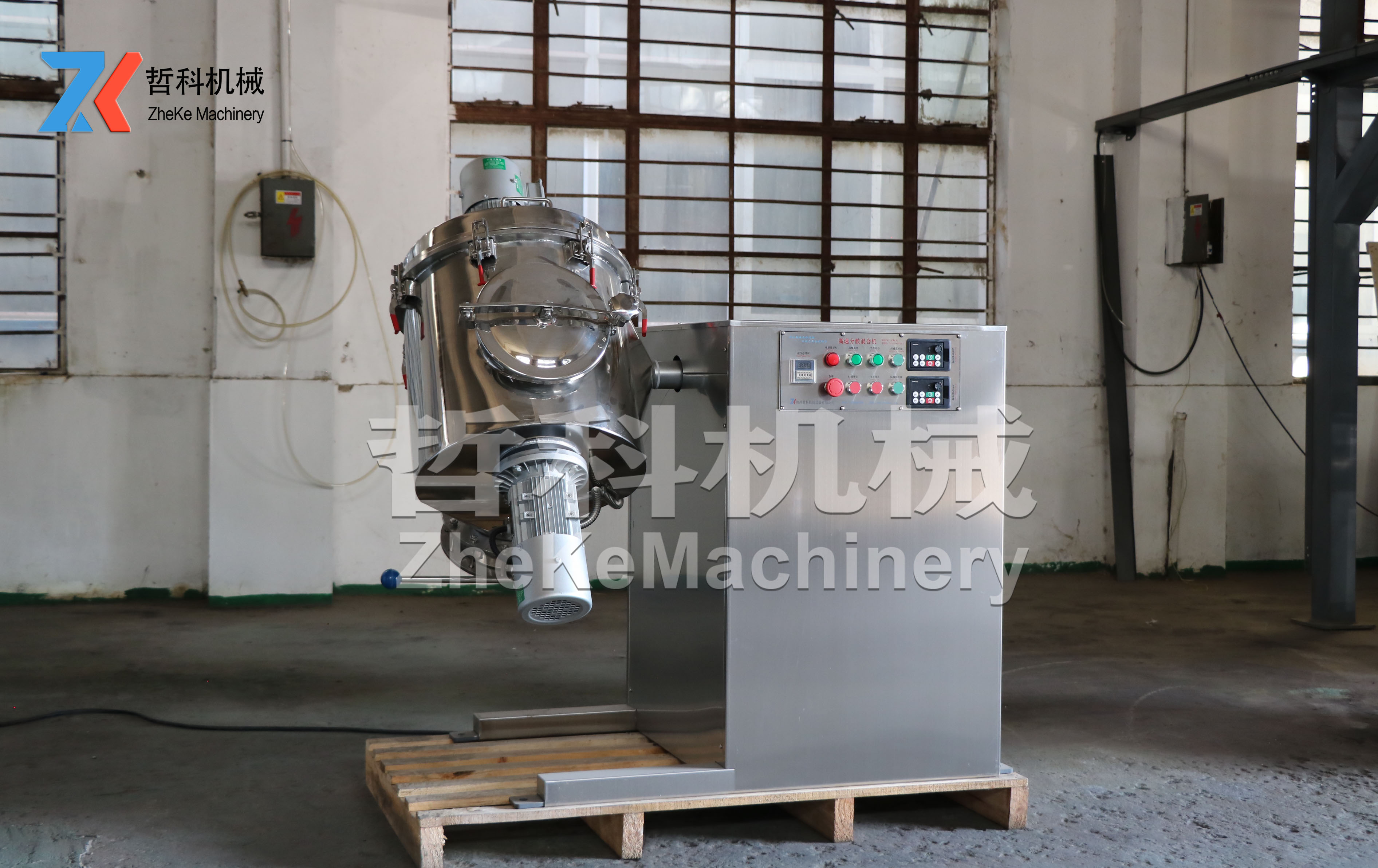
With the continuous improvement of the performance requirements for brake pads in the automotive industry and the rapid development of materials science, brake pad material mixing equipment is also constantly innovating and upgrading, and intelligent technology is gradually integrating into the mixing equipment. The Zheke brake pad material high-speed mixing equipment, by installing various sensors, can monitor the mixing status, mixing time and rotational speed of the materials in real time, ensuring that the best mixing effect is achieved each time. This not only enhances production efficiency but also reduces the impact of human factors on the quality of the mixture. The high-speed mixing equipment for brake pad materials of Zheke adopts a unique dual-power mixing process. The movement of the material bucket combined with the high-speed rotation of the internal flying knives causes the materials to form a strong convection and shearing movement within the material bucket. The 360° movement of the material bucket enables the materials to change from aggregated to dispersed and intermix with each other. There are no dead corners during the mixing process. The flying knives inside the material bucket rotate at high speed, forcibly shearing the materials. These two movements rapidly disperse and interweave different materials, achieving rapid and uniform mixing of the materials. During the mixing process, as the material temperature should not be too high, the high-speed mixer for brake pad materials adopts low-temperature mixing technology to prevent the performance deterioration of certain materials due to high temperature during the mixing process and reduce energy consumption at the same time. With the continuous advancement of technology, it is believed that future hybrid equipment will make greater contributions to the automotive safety industry in a more efficient, intelligent and environmentally friendly way.
 english
 豫公網(wǎng)安備 41010302003023號